
Straw & stover. A complex feedstock, a more efficient process.
BiHcon pre-treatment to improve the degradability of fibrous feedstocks in anaerobic digestion.
Why straw is hard to digest
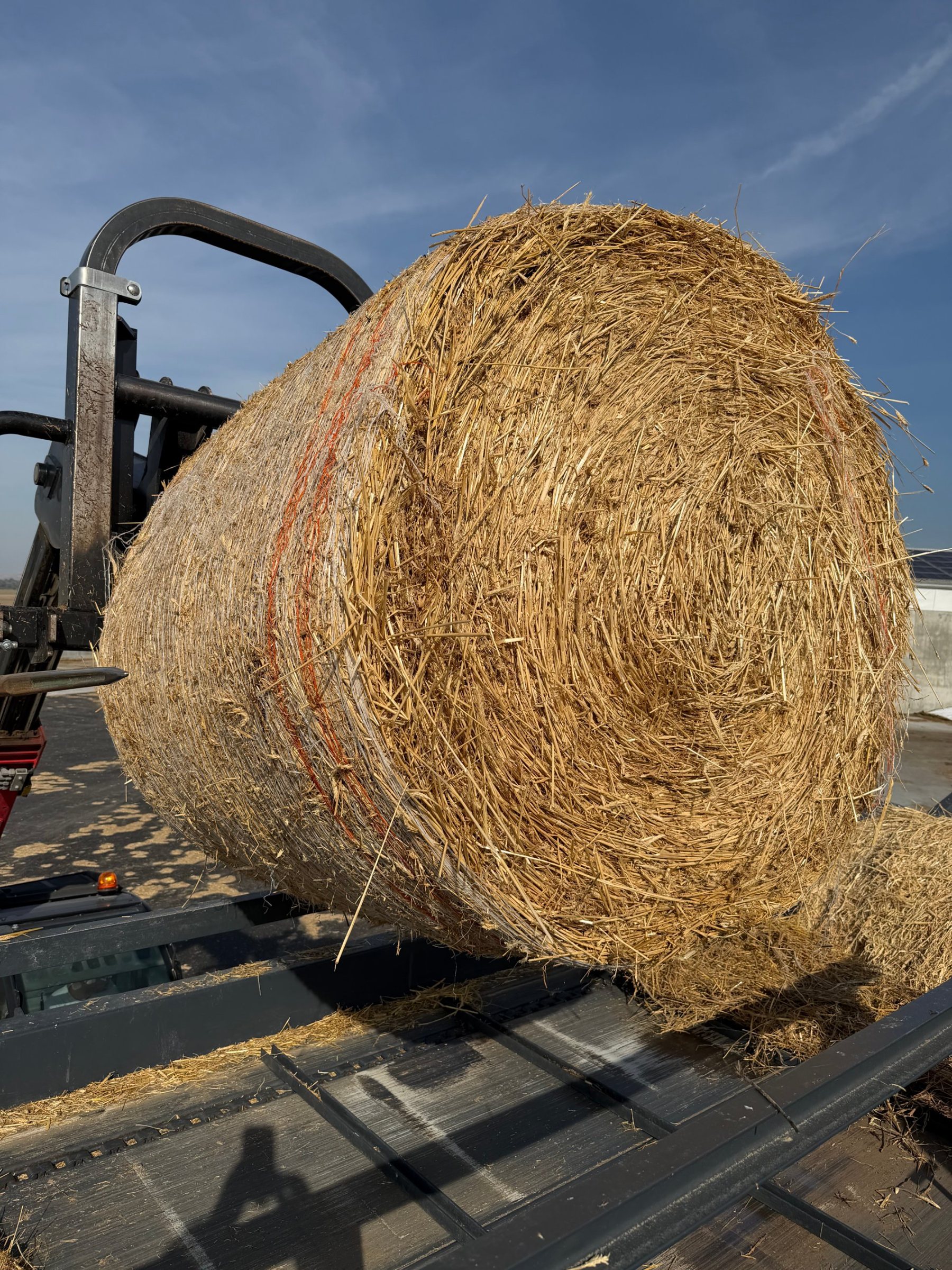
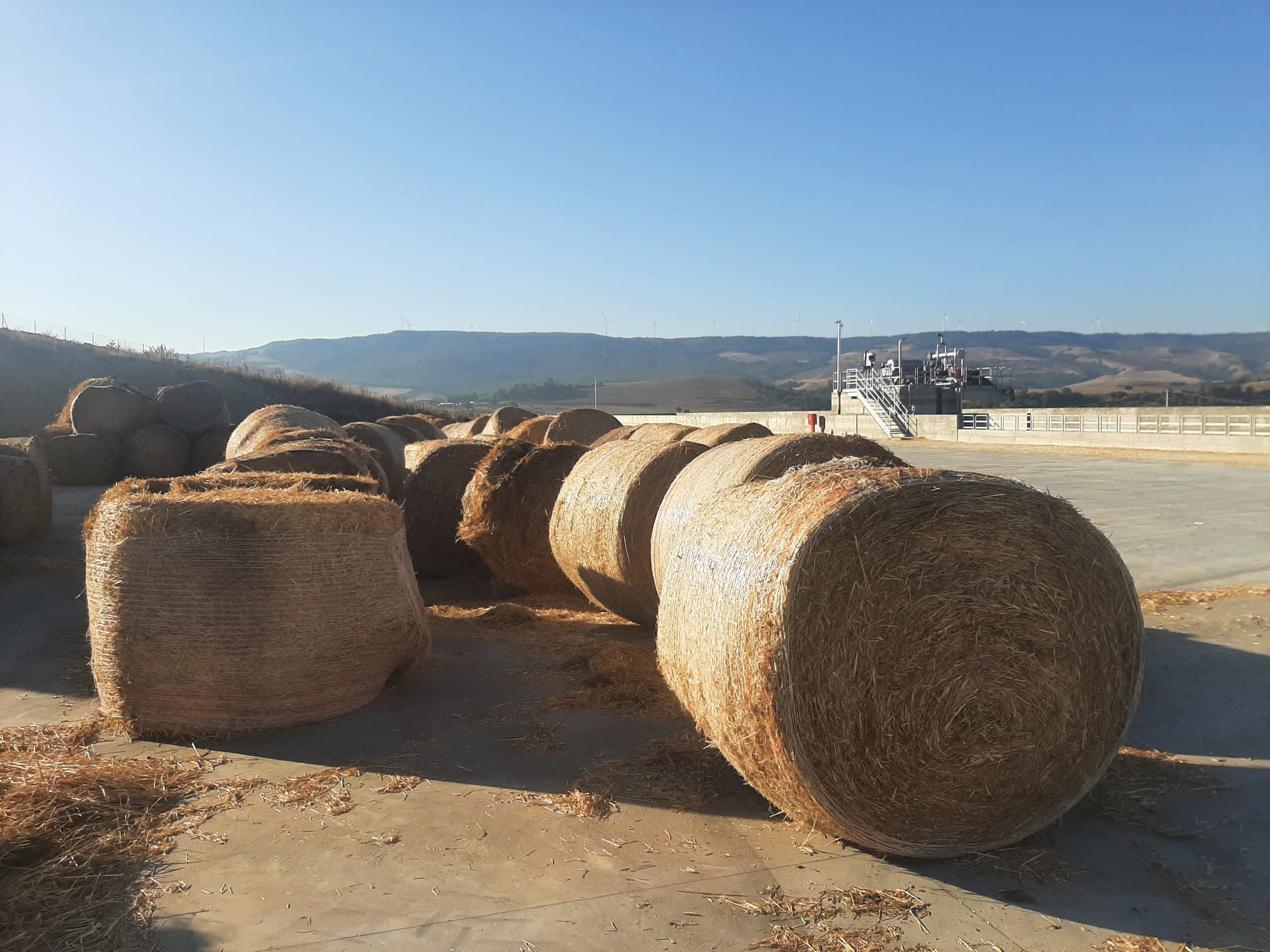
Straw arrives in compact round bales, with high dry matter and a high lignin content. In the digester it tends to float and form a surface layer, and bacteria break it down slowly. It also needs dedicated feeding systems and energy for pre-treatment.
Typical composition: cellulose 40%, hemicellulose 30%, lignin 20%, other components 10%. Lignin and hemicellulose protect the fibre from bacteria: pre-treatment breaks this protective structure.
From bale to biomethane
Straw
Lignocellulosic feedstock, hard to degrade.
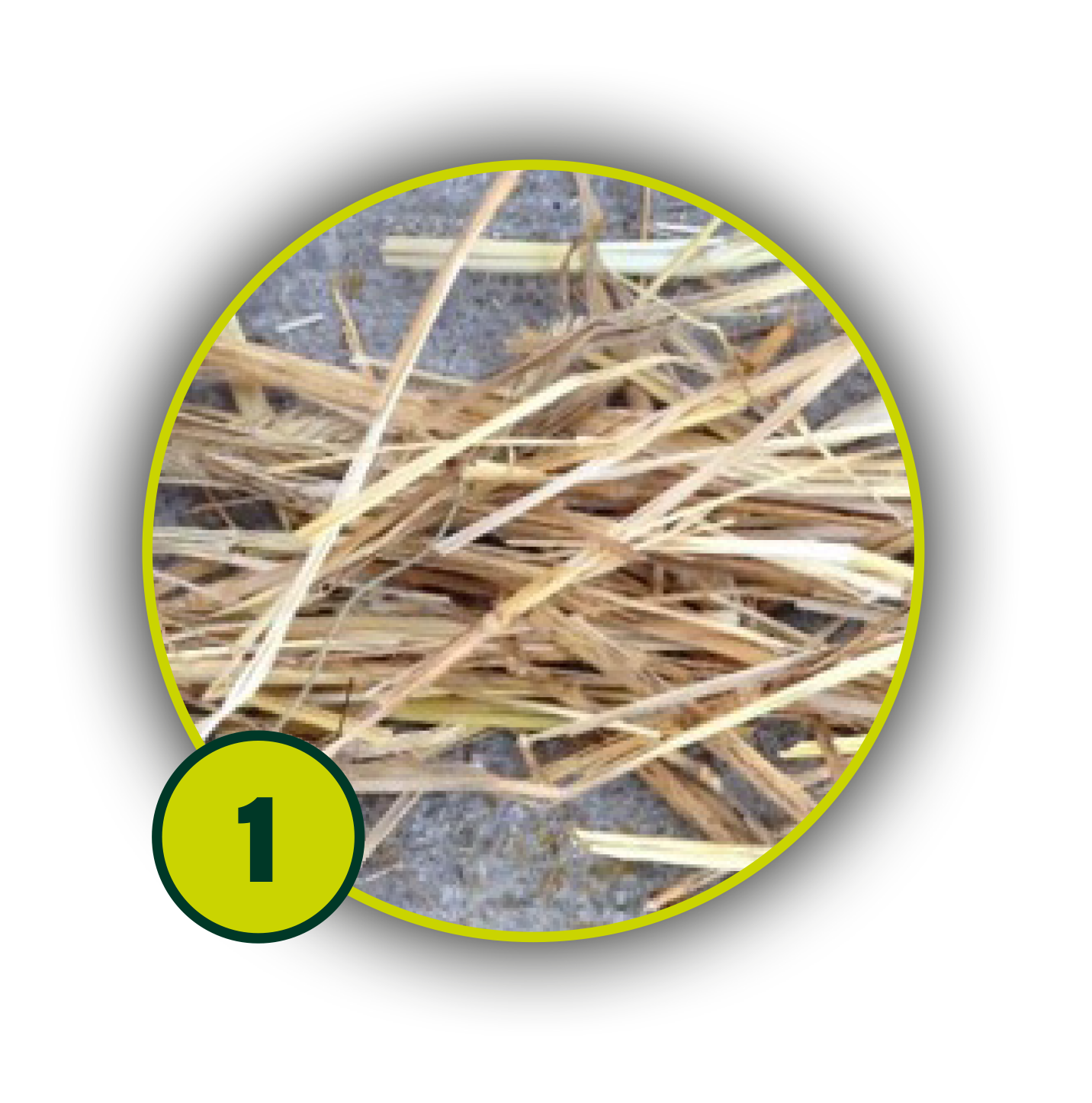
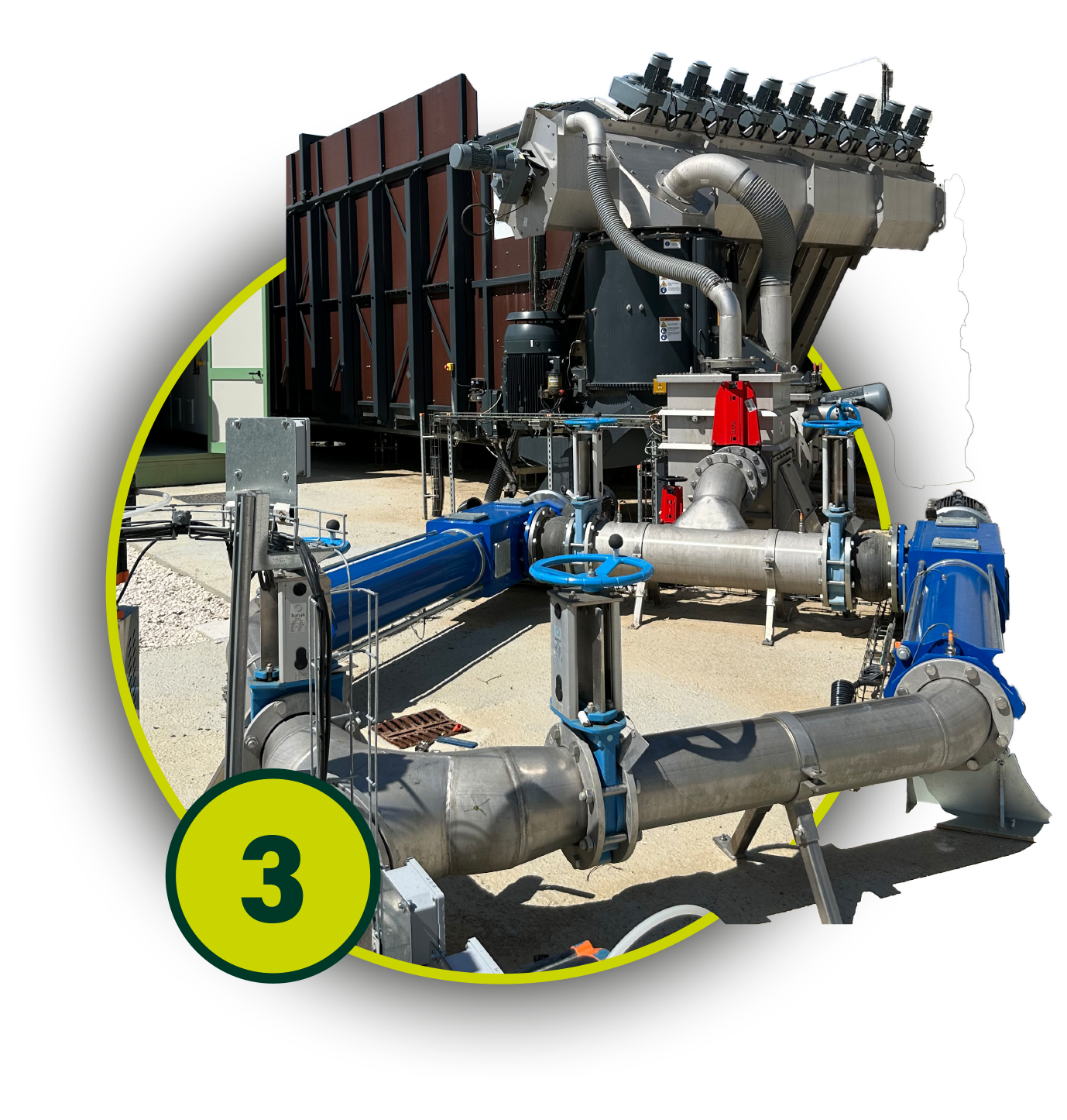
2–3 · Pre-treatment
Mill and integrated FIBRE boost line.
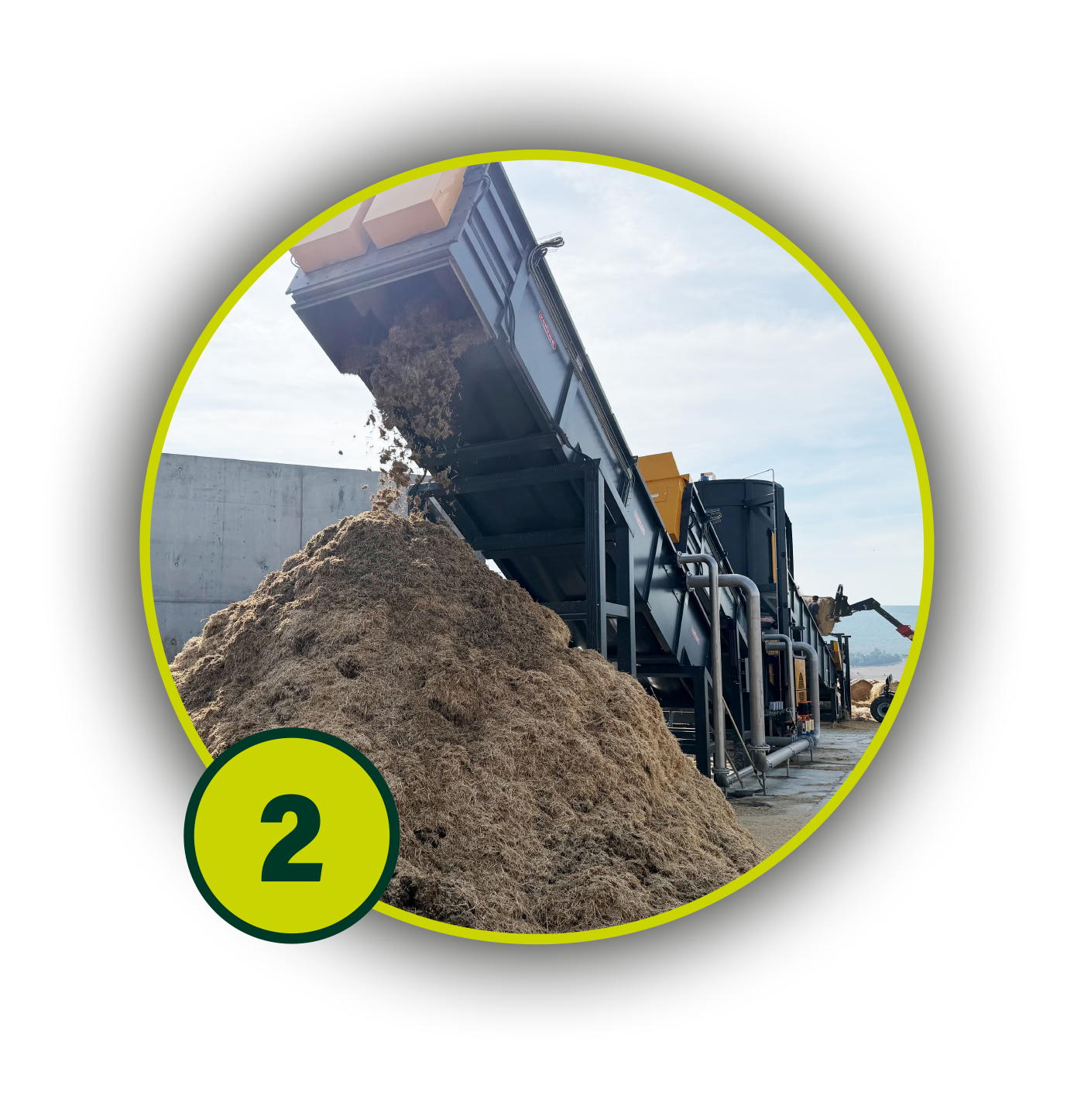
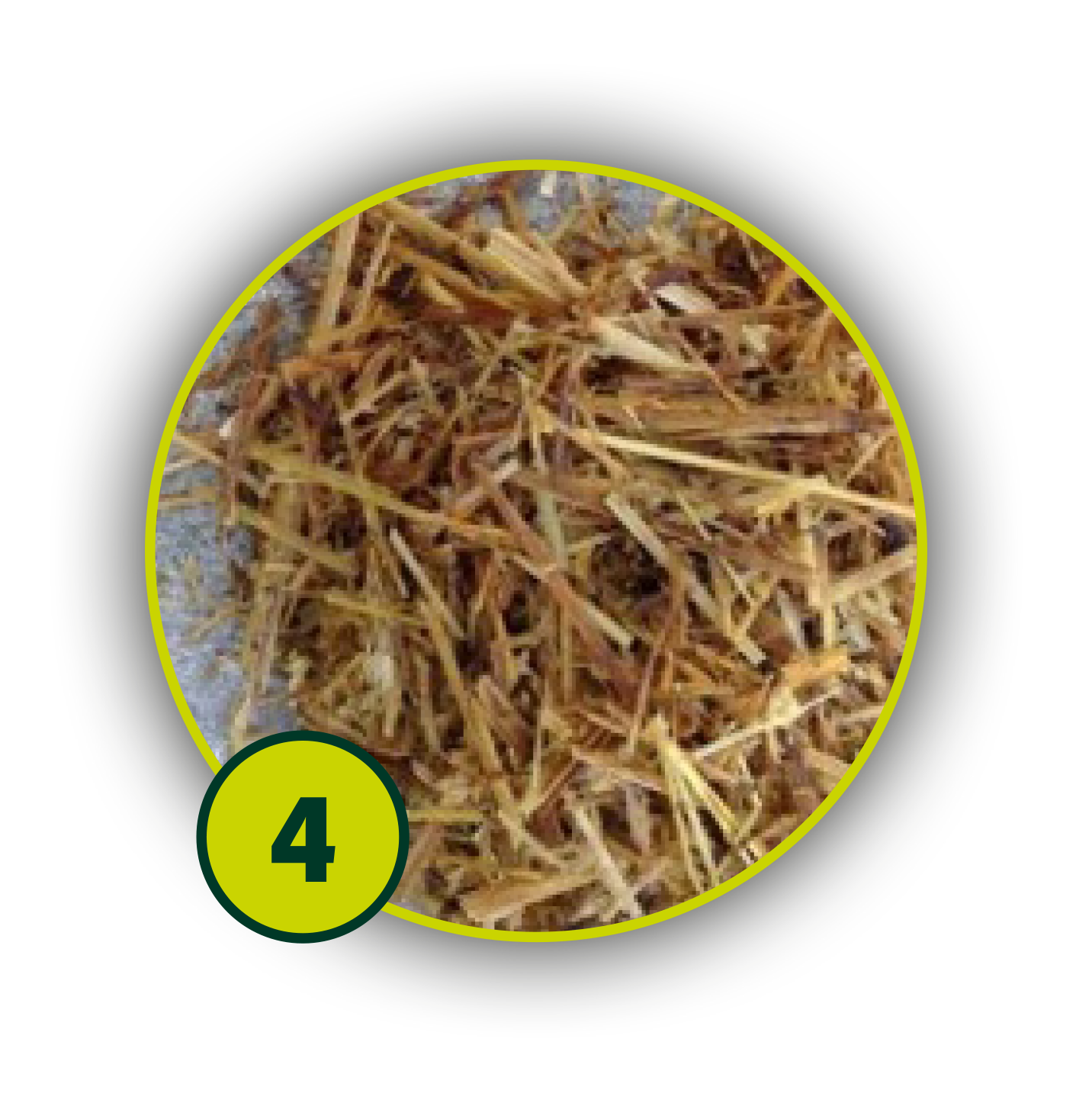
4 · Pre-treated material
Larger surface, ready for the digester.
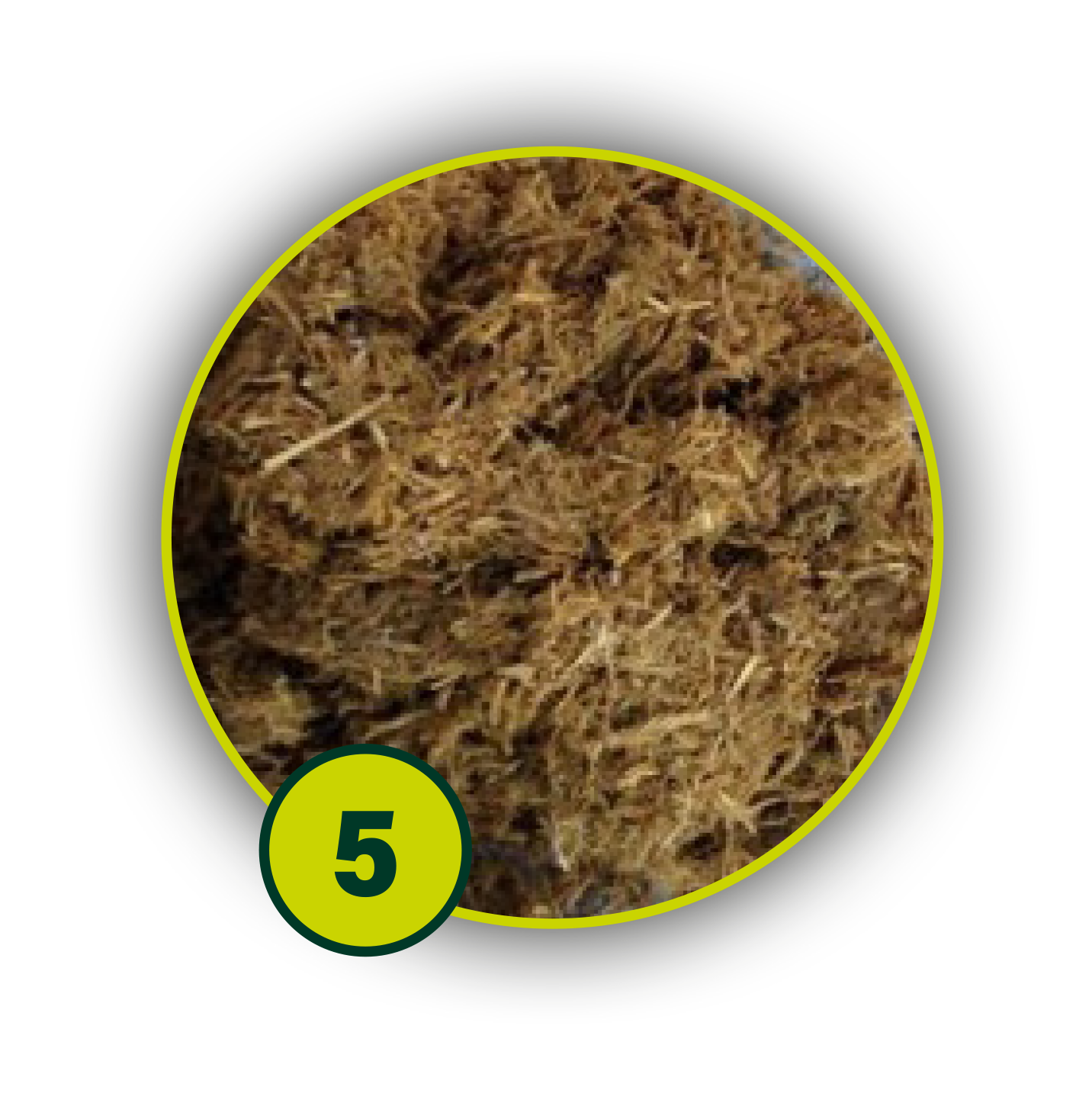
5 · Anaerobic digestion
More biomethane, shorter degradation times.
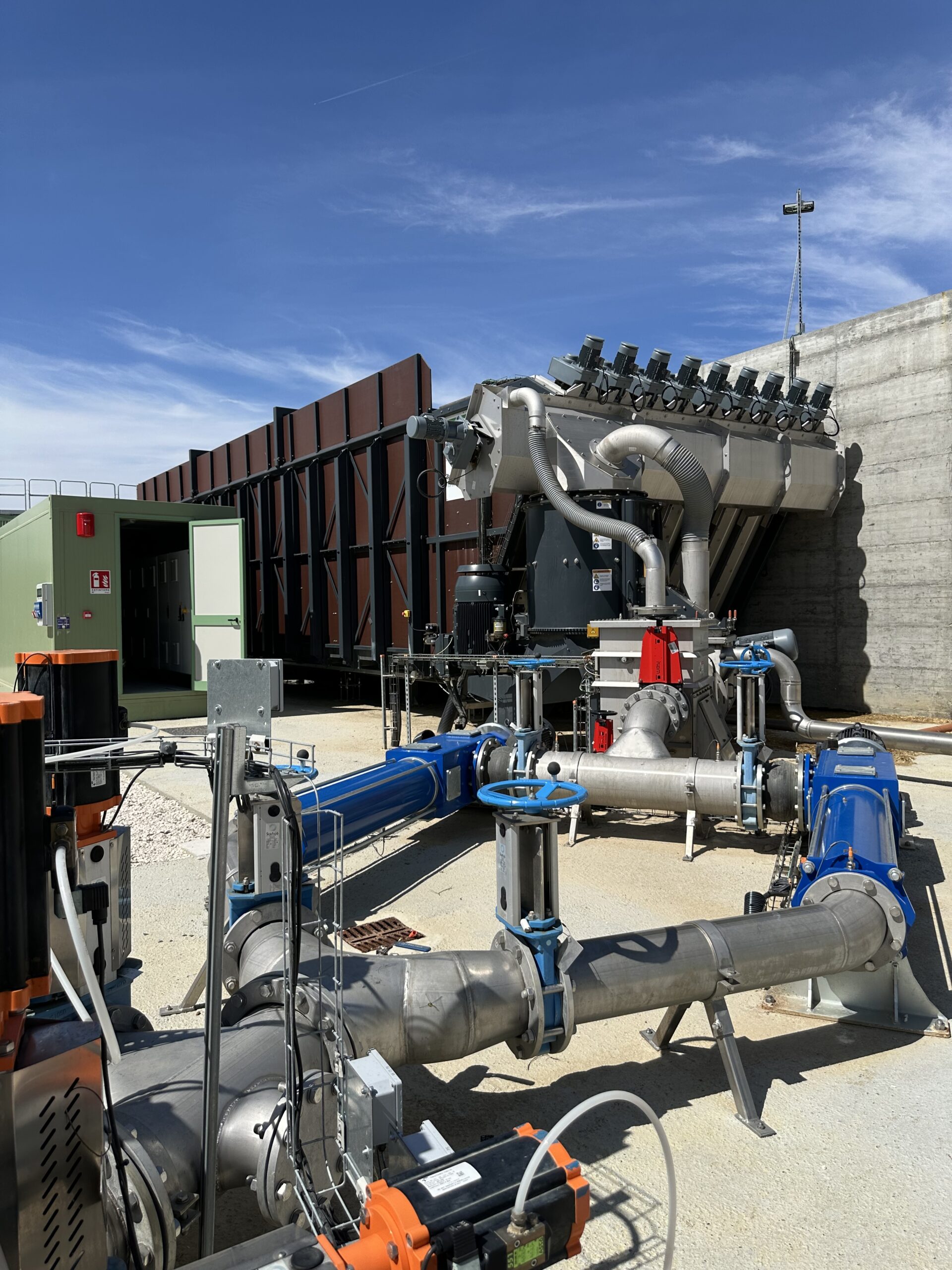
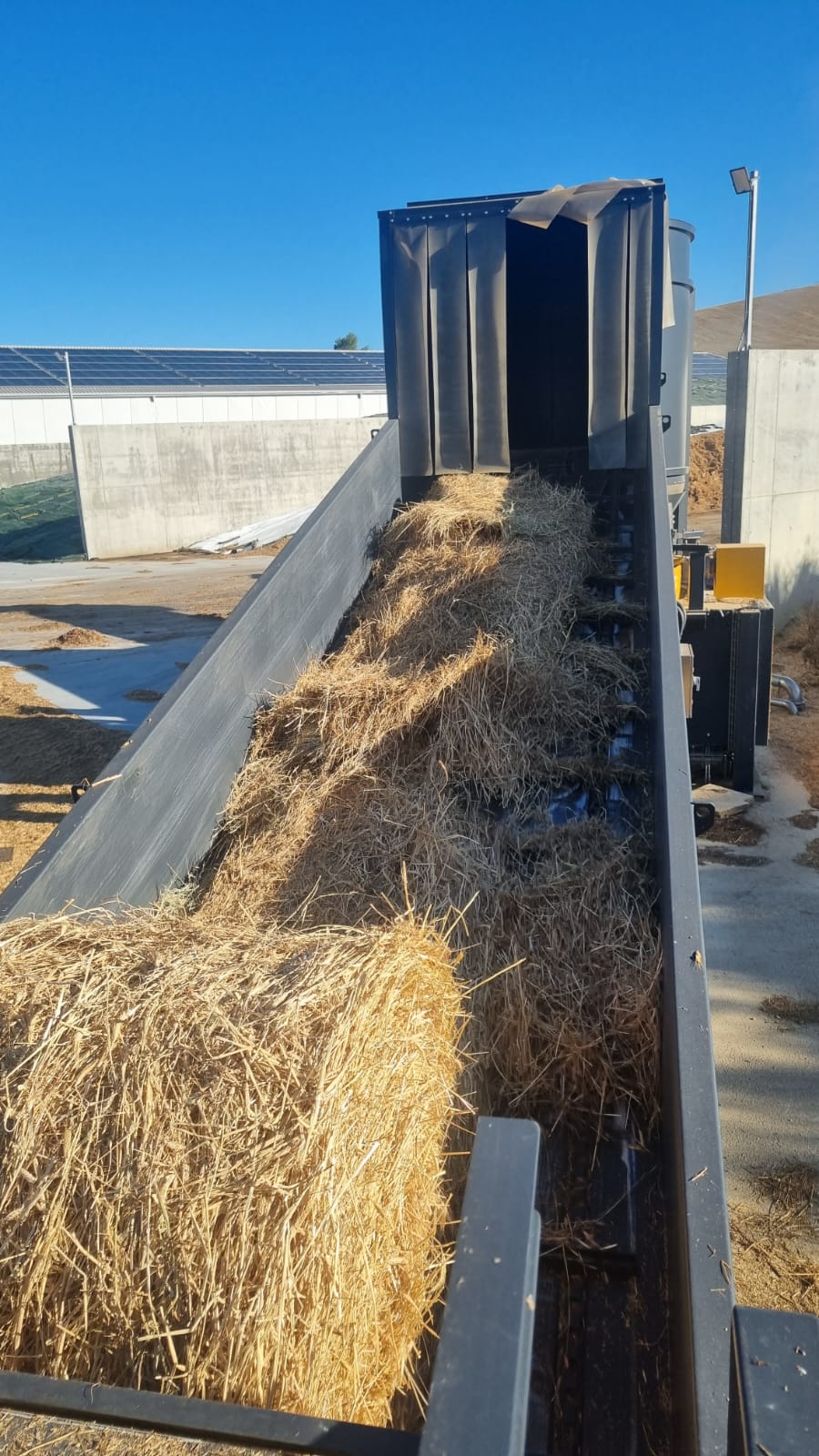
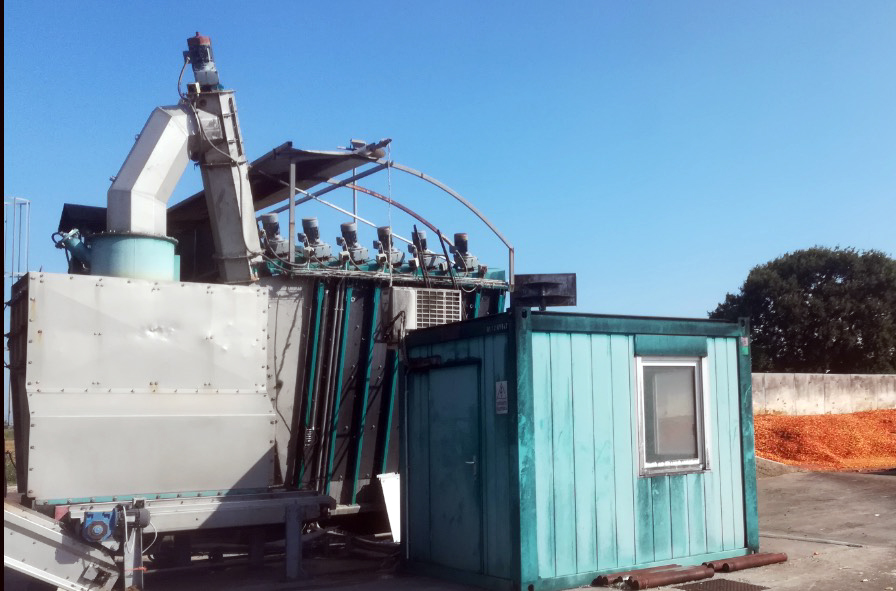
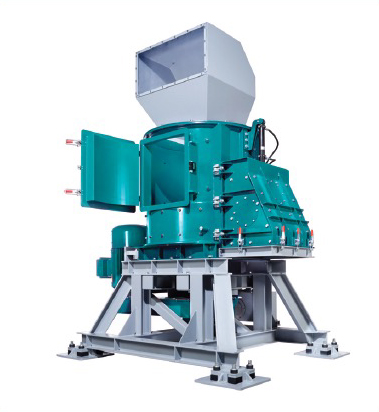
The mill: one line, two uses
Round bales are fed whole and shredded into open fibre. The same line pre-treats straw for composting and for anaerobic digestion, upstream of the reactor. It is the right solution for plants that process large quantities of straw.
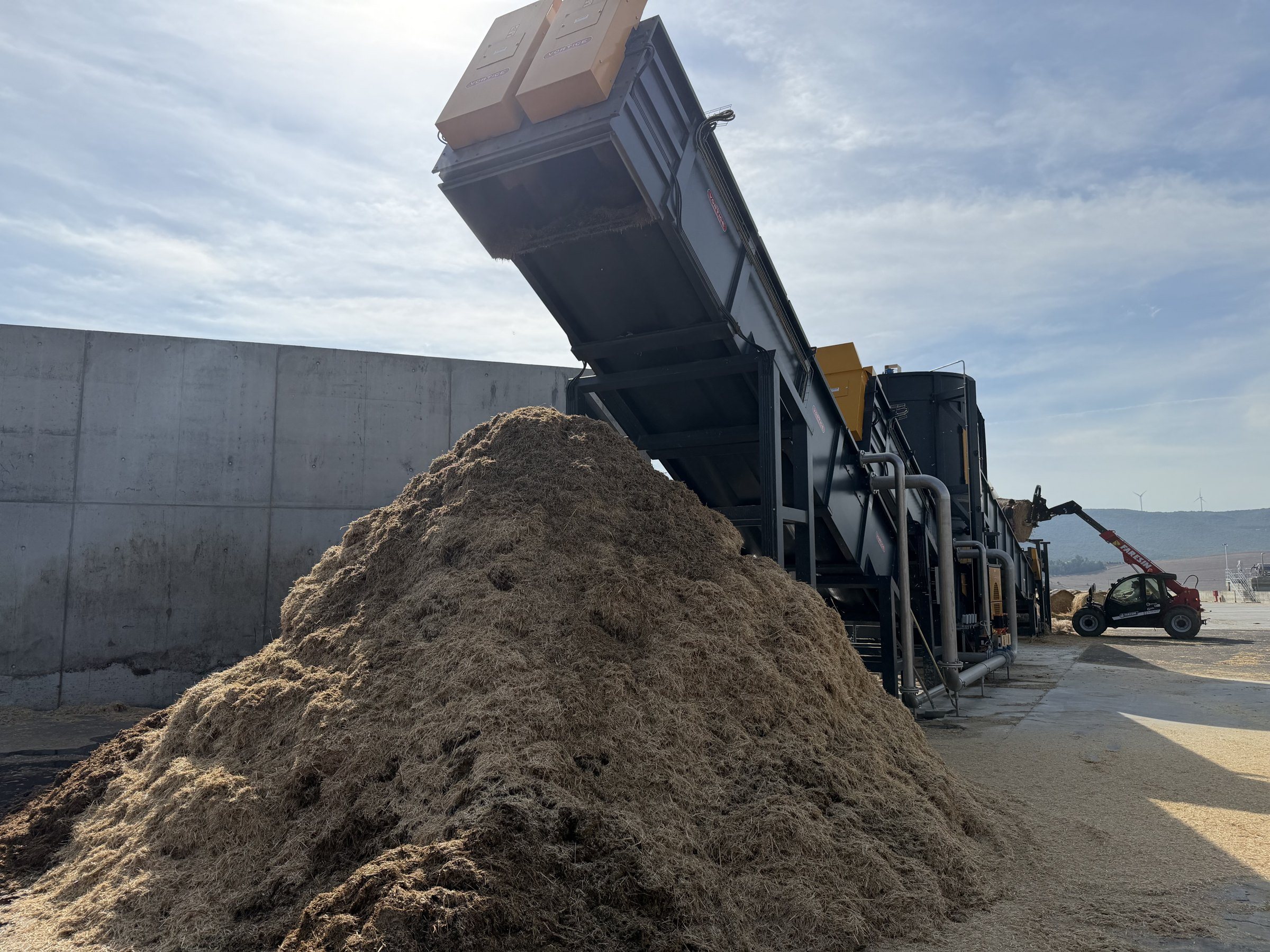
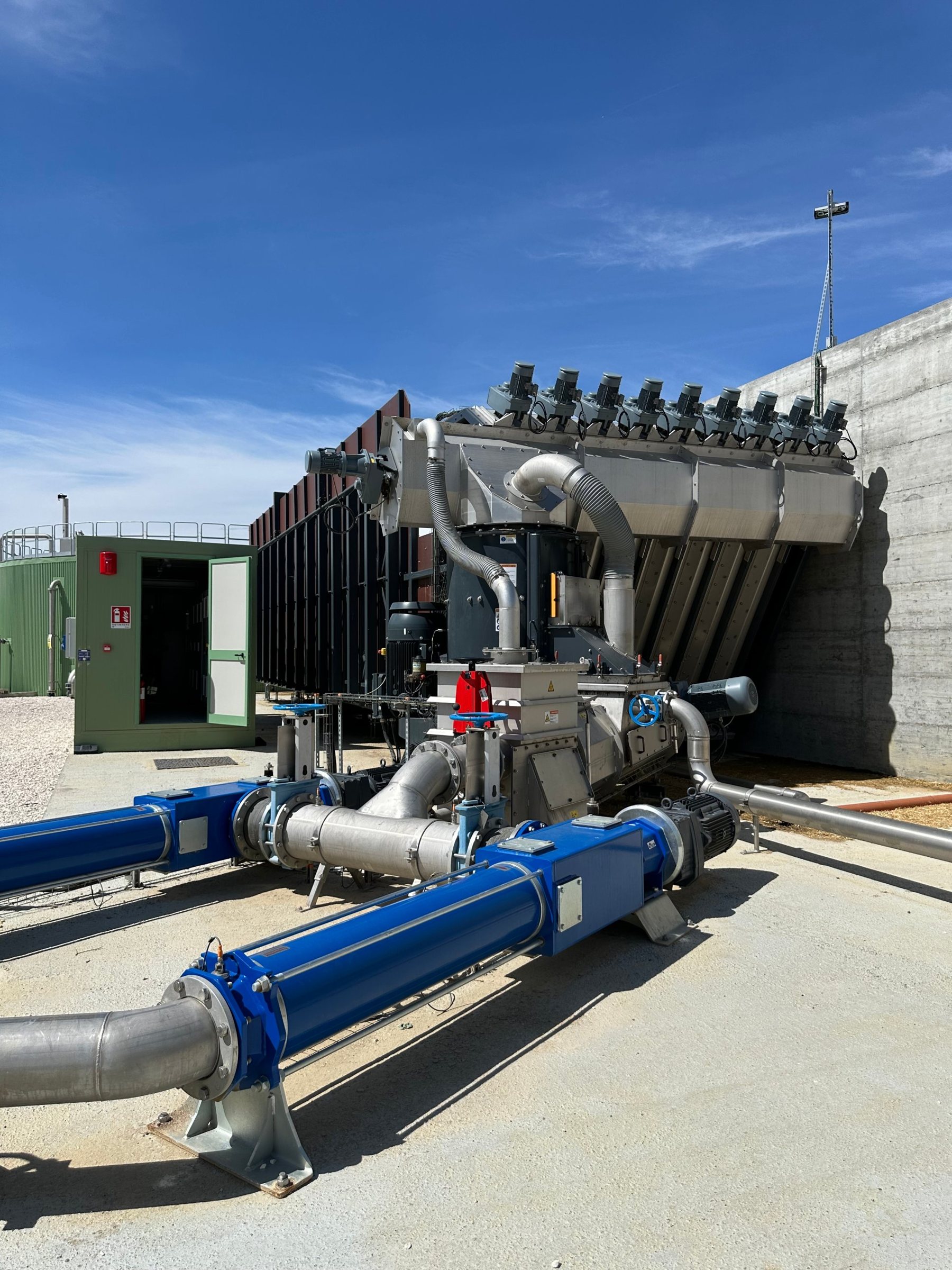
From hydrophobic to hydrophilic
The mechanical mill + reactor system opens the structure of the fibre. Straw absorbs water and enters the digester through a solid-liquid feeding system.
Pre-treatment is only part of the answer
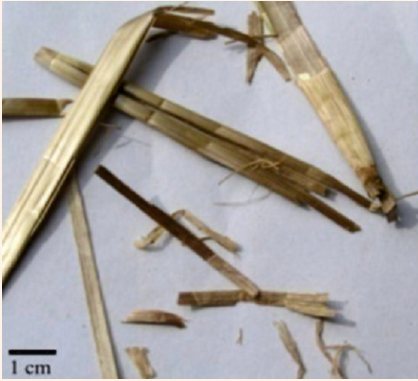
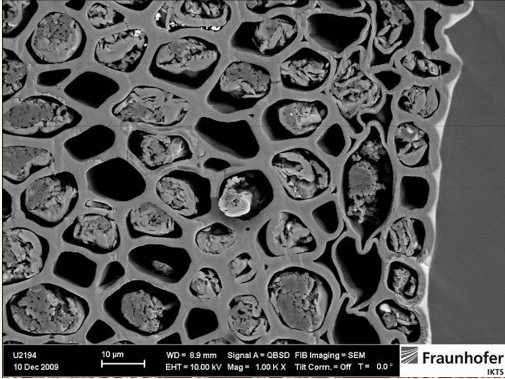
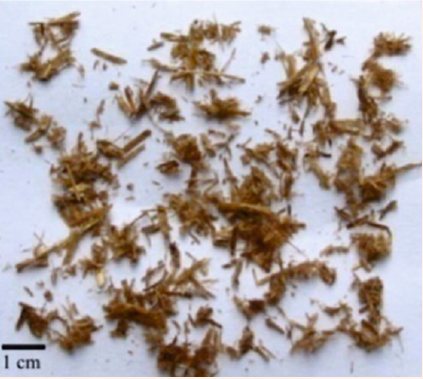
Comparable to extrusion
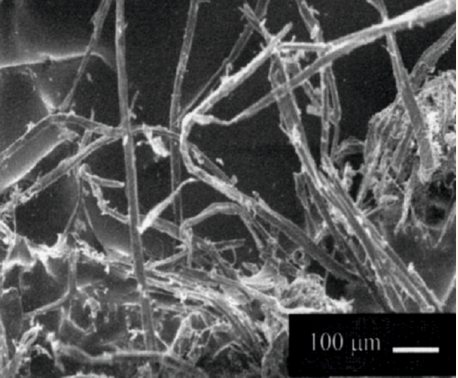
BiHcon mechanical pre-treatment is comparable in effectiveness to straw extrusion. Tests show a clear increase in biogas yield compared with untreated straw.
Indicative values (KTBL) |
Biogas |
Methane |
Maize |
650 l/kg VS |
338 l CH₄/kg VS |
Pre-treated straw |
530 l/kg VS |
265 l CH₄/kg VS |
Under the electron microscope, the fibre structure opens clearly after mechanical treatment.

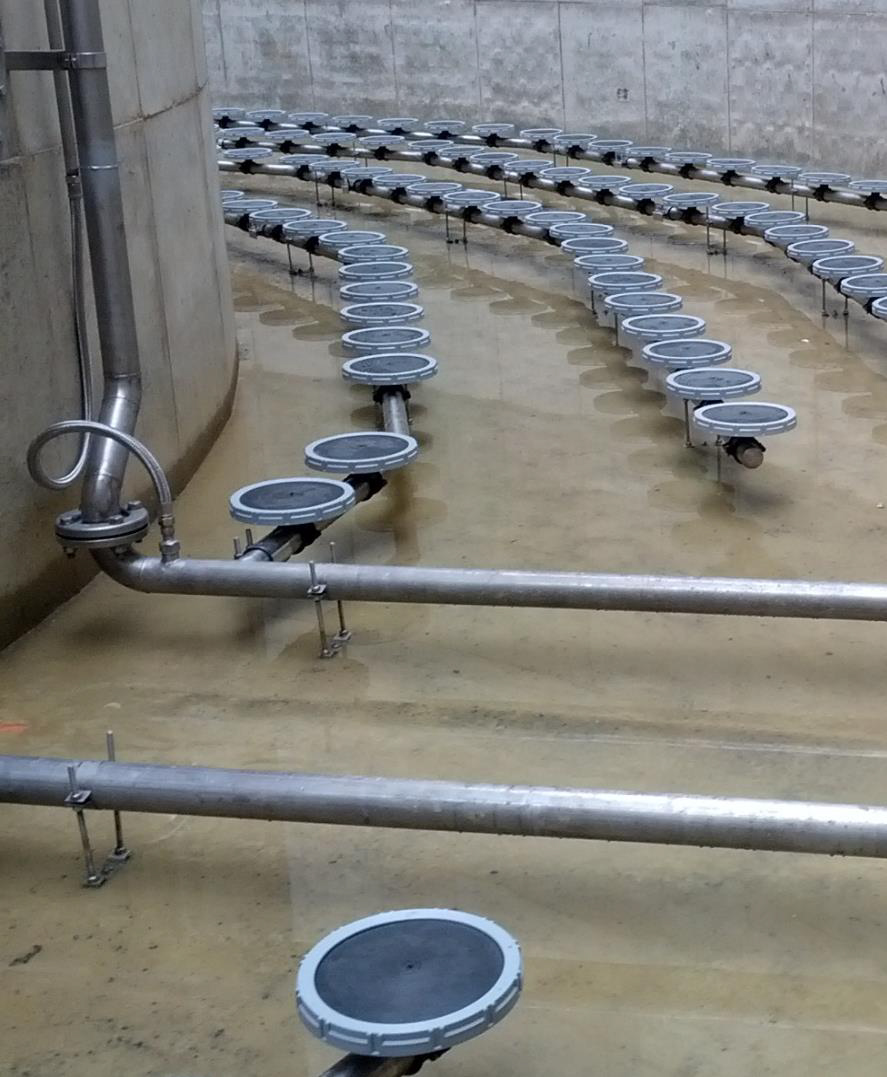
The “Spritz Mix” is fundamental to keep wet the upper surface of the tank in order to avoid the formation of superficial crust.

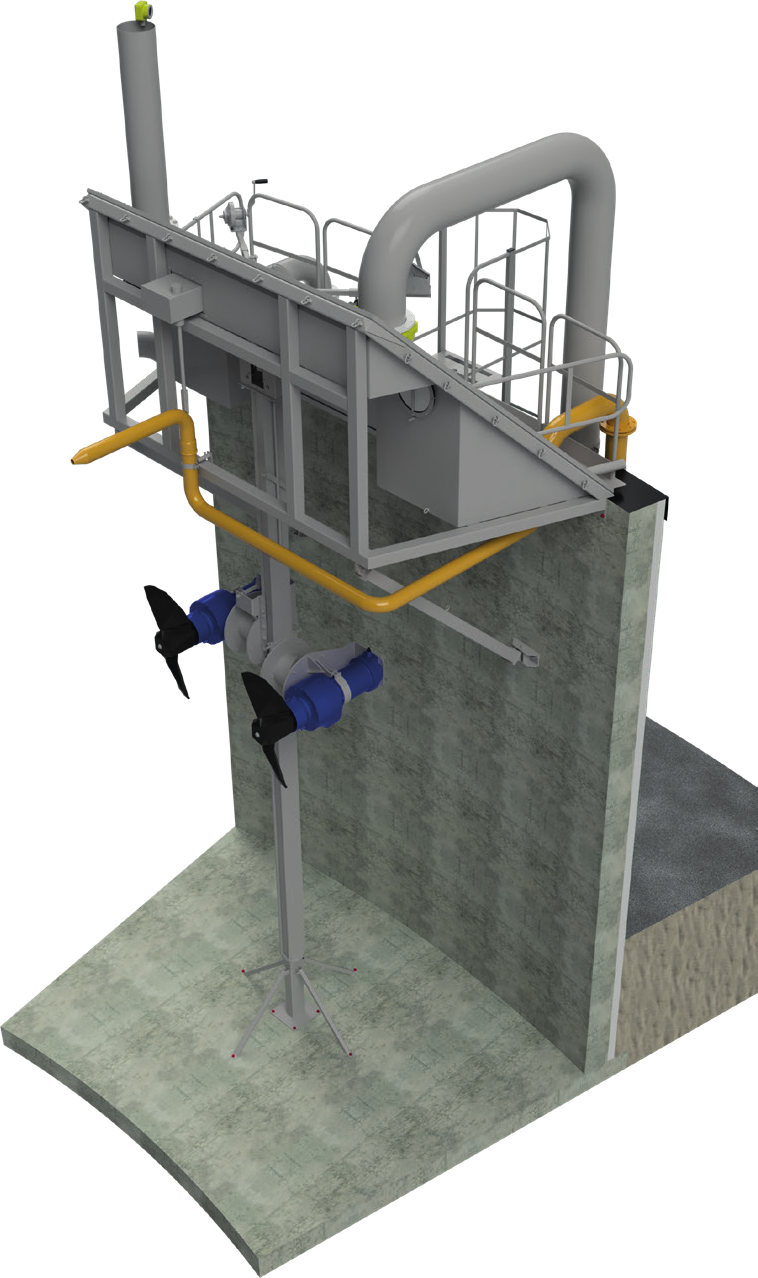

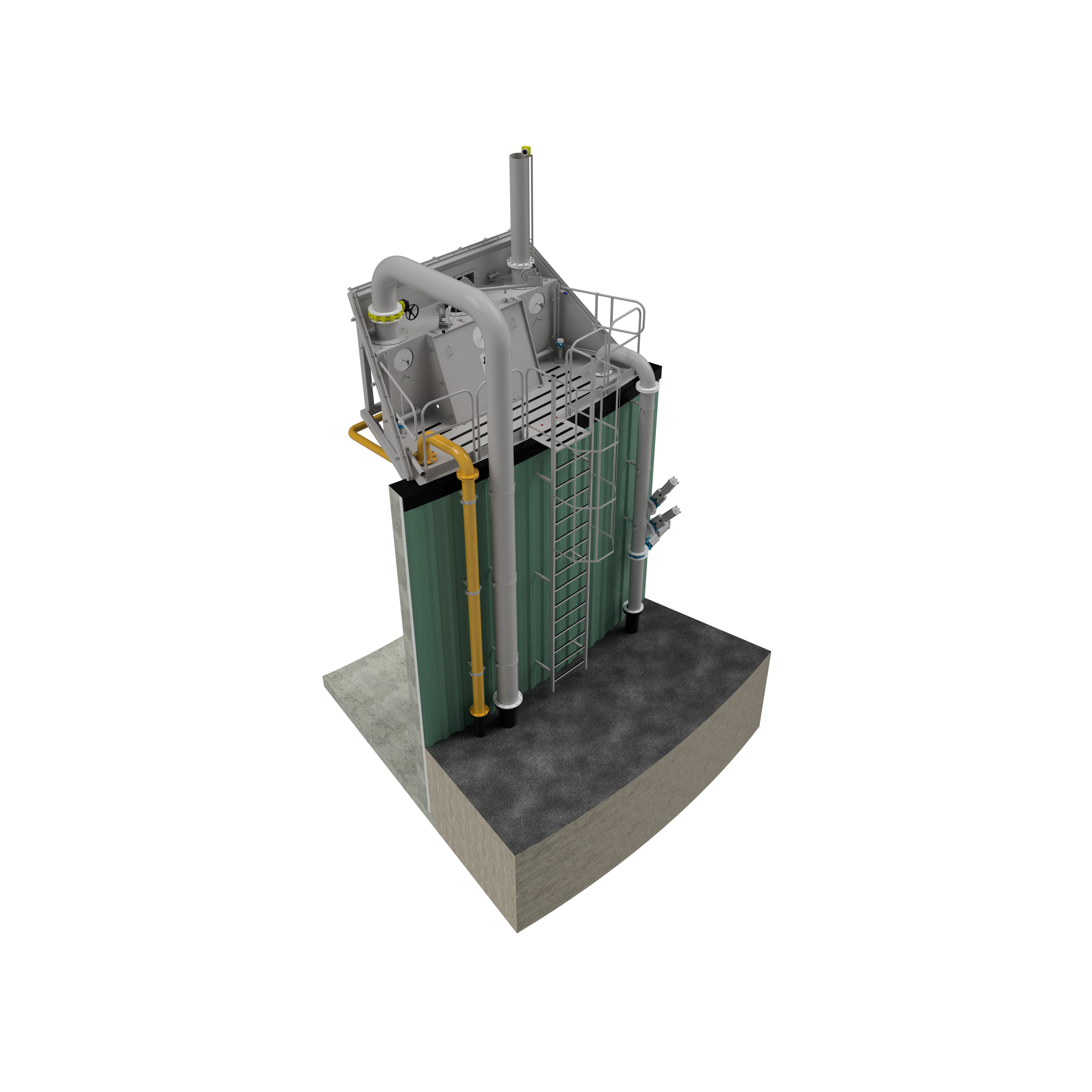
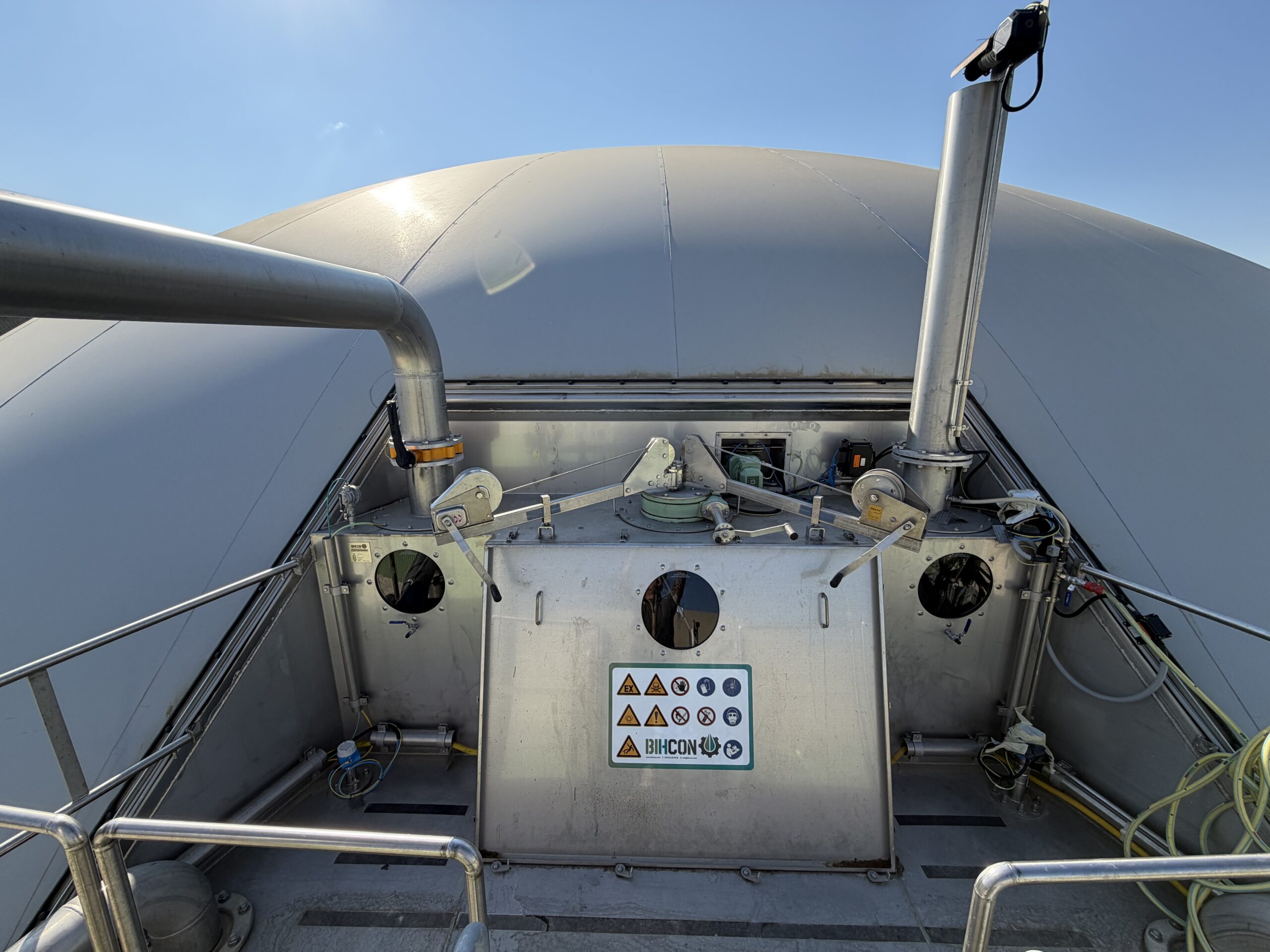
BiHcon solution to concentrate all operations in a single tool


GLOBAL PROCESS CONTROL
From biological data to maximum methane potential
Biomasse
Straw
Stover
Manure
Poultry litter
Triticale
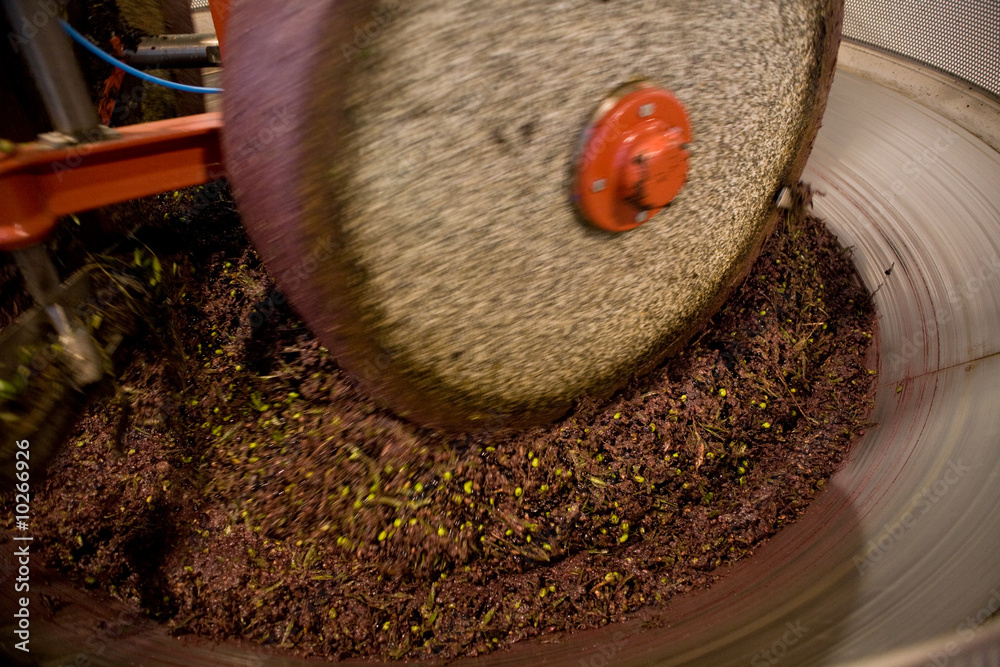
Olive pomace
Tre fasi
From biological control to biomethane certification.
More biology. More methane. More value.

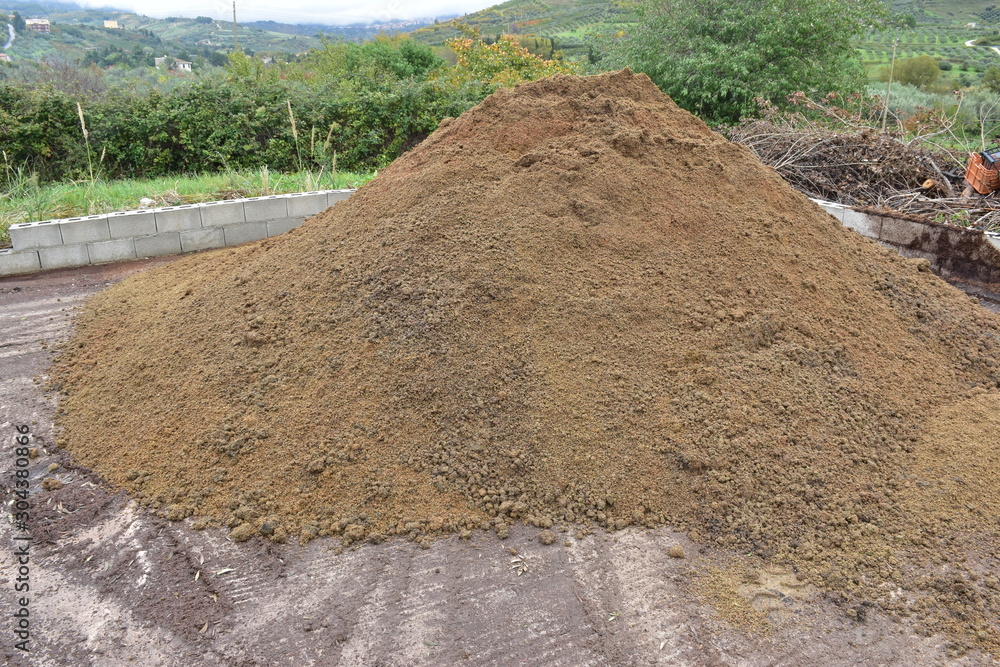
By pre-treating the olive pomace with atmospheric air and FeO2, this provide the oxidation of the poly-phenols and allow to run the AD with up to 100% olive pomace
BIOHYDROGEN
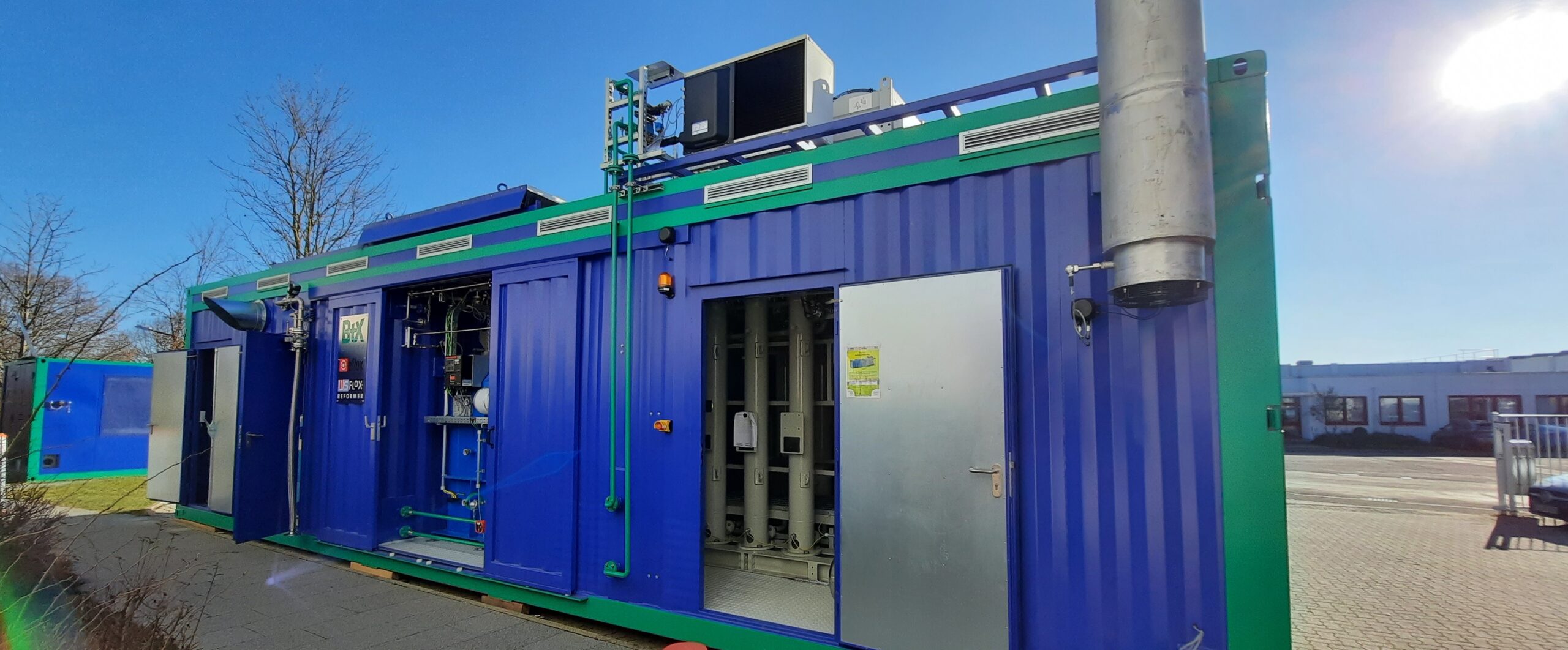
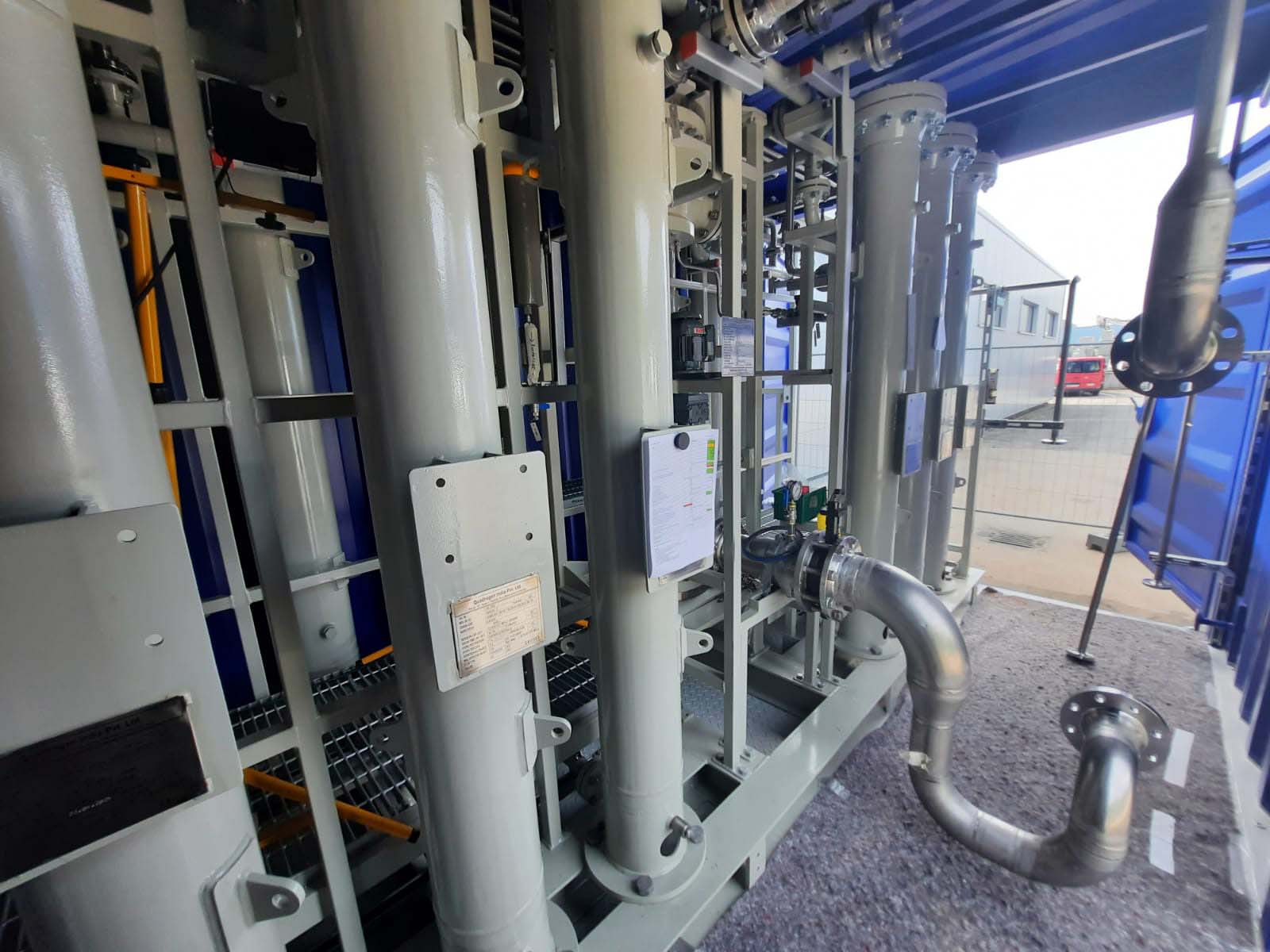
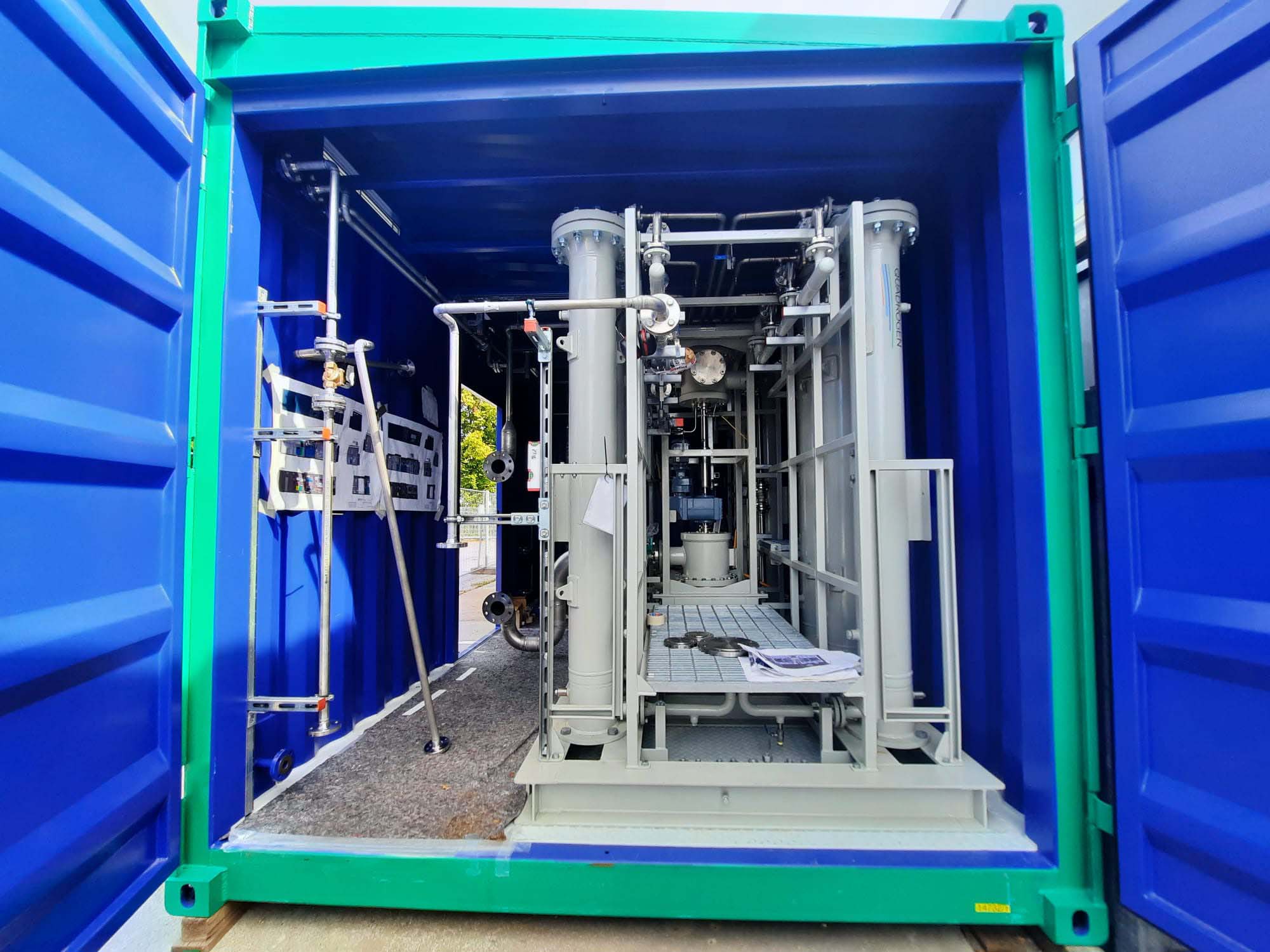
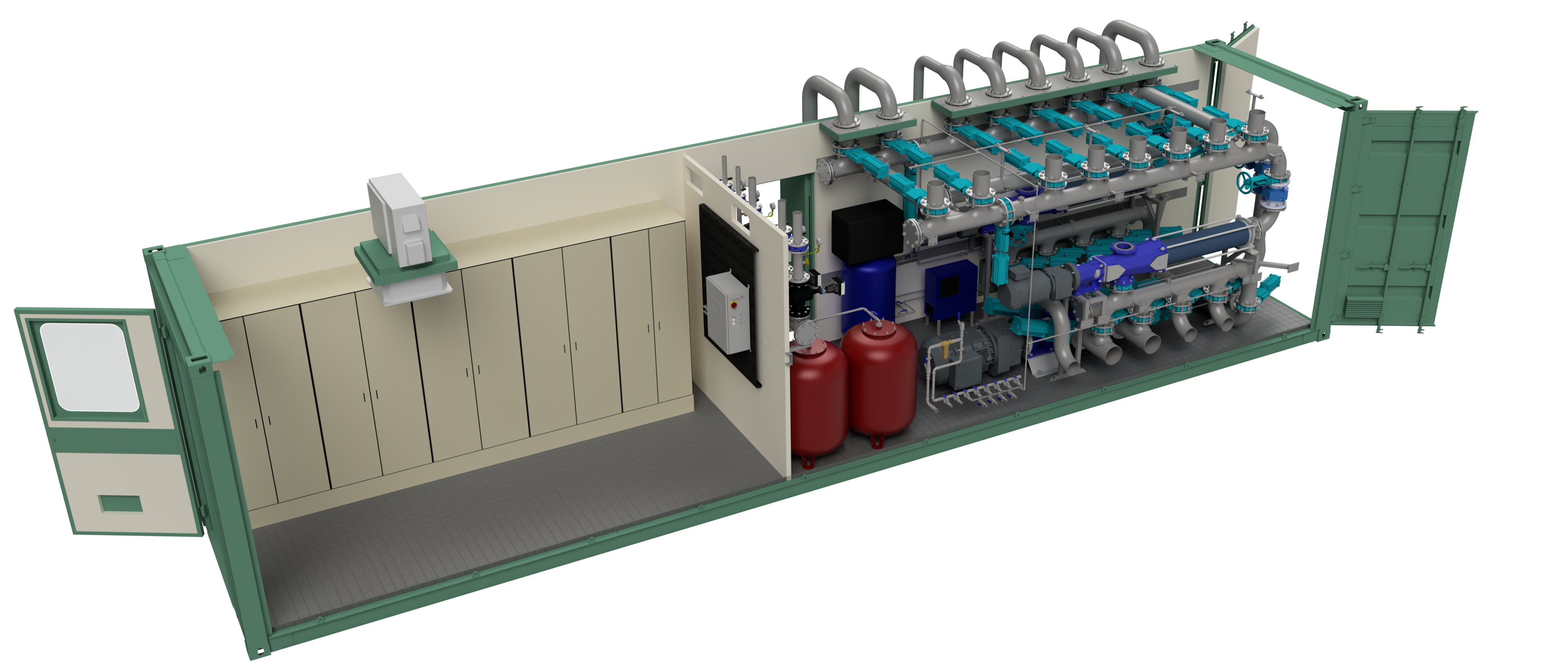
Biohydrogen Production via Biogas Reforming:
With biogas to CO2-neutral mobility – through biogas steam reforming in space-saving container solutions without the need to install a biogas upgrading system.
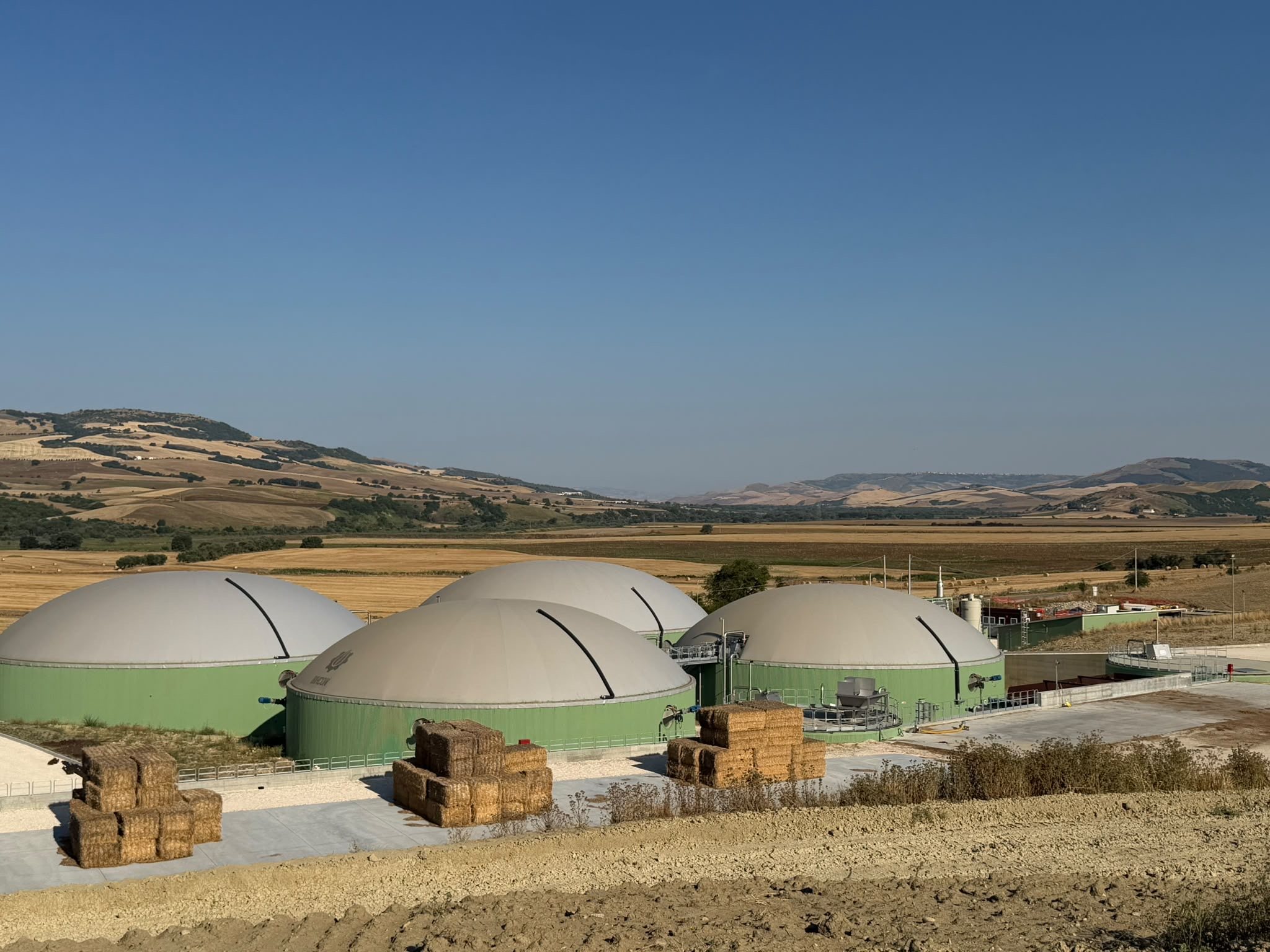
Sustainable and renewable energy supply can be achieved through decentralized Biohydrogen production utilizing local biomass and distribution via a corresponding hydrogen filling station.
The biogas reforming units are scalable in size and can even produce hydrogen with net negative greenhouse gas emissions by using residual materials such as slurry or manure (without considering CO2 capture).
The plants are modularly scalable with more than 100 kg/day biohydrogen yield per reformer module.
| Reforming Units | BTH100 | BTH200 | BTH400 | Unit |
|---|---|---|---|---|
| Biogas Input | 50 | 100 | 200 | Nm³/h |
| Hourly H2 Production | 5 | 10 | 20 | kg/h |
| Yearly H2 Production | 40 | 80 | 160 | t/a |
*With technology from our partner BtX energy GmbH in Germany, the holder of the first certificate for green hydrogen.
For biogas reforming project inquiries in Germany, please contact them.
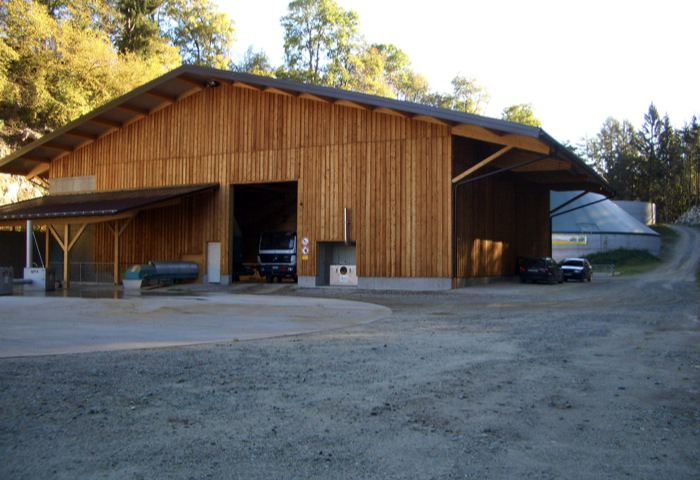
Biowasserstoff Terenten:
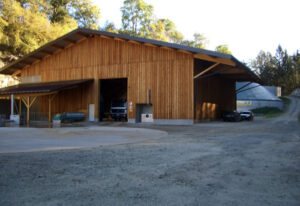 First carbon-negative Bio-H2 Production Facility in Italy.
Located in Terenten (BZ), South Tyrol.
Revamping of existing small-size biogas plant.
Feed-in tariff expired and no possibility to gas grid connection.
Installation of the Reforming Unit BTH 200 including a 300 bar Trailer Filling Station.
Production of biohydrogen, heat and electricity.
Project Status: authorized
Project Developer: TerraX
Plant Operation: Q4 2025
Utilized Biomass: slurry, manure
Biohydrogen Production: 80 t/a
Biohydrogen Off-taker: Mobility
Biohydrogen Quality: Fuel Cell Grade